
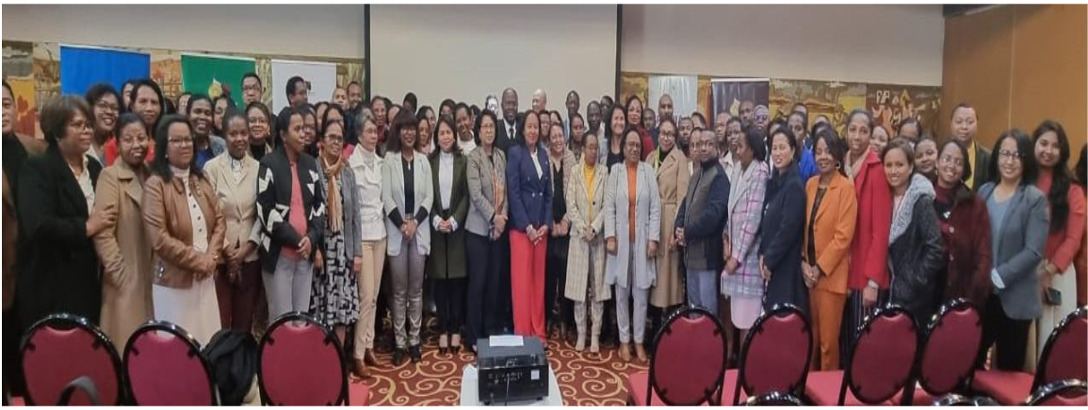
In July 2025, the Countdown to 2030 Madagascar team participated in the national RMNCAH+N coordination meeting held at the Carlton Hotel in Antananarivo. The meeting, chaired by the Secretary General of the Ministry of Public Health, brought together a broad range of stakeholders involved in reproductive, maternal, newborn, child and adolescent health and nutrition across the country.
A multi-sectoral platform for alignment
The coordination meeting convened key actors from across the health system and beyond, including central directorates of the Ministry of Health, regional and district health authorities, community actors, and representatives from multiple ministries such as education, environment, youth, and higher education. Technical and financial partners, as well as civil society organizations, were also in attendance.
This high-level platform provided an important opportunity to align priorities, share evidence, and strengthen coordination across sectors working to improve health outcomes for women, children, and adolescents in Madagascar.
Showcasing Countdown to 2030 results
During the meeting, the Countdown Madagascar team presented the initiative and its contributions at global, national, and subnational levels. The presentation highlighted:
-
The global mandate and evolution of Countdown to 2030
-
Key achievements of the Madagascar country collaboration
-
Results from international and national analyses
-
Findings from subnational and field-level analyses conducted in Madagascar
This dissemination session enabled participants to better understand how data and evidence generated through Countdown can inform decision-making and strengthen accountability in the health sector.
Supporting evidence-informed decision-making
By sharing its analytical work with a wide range of stakeholders, Countdown Madagascar contributed to reinforcing the use of data in national planning and coordination processes. The engagement also created space for dialogue between policymakers, program managers, and partners on how to address persistent gaps and inequalities in RMNCAH+N outcomes.
Looking ahead
The participation of Countdown Madagascar in this national coordination meeting reflects the initiative’s commitment to translating evidence into action. As the program enters its final phase, such dissemination efforts remain critical to ensuring that data-driven insights continue to inform policies, programs, and investments aimed at improving health outcomes across Madagascar.