
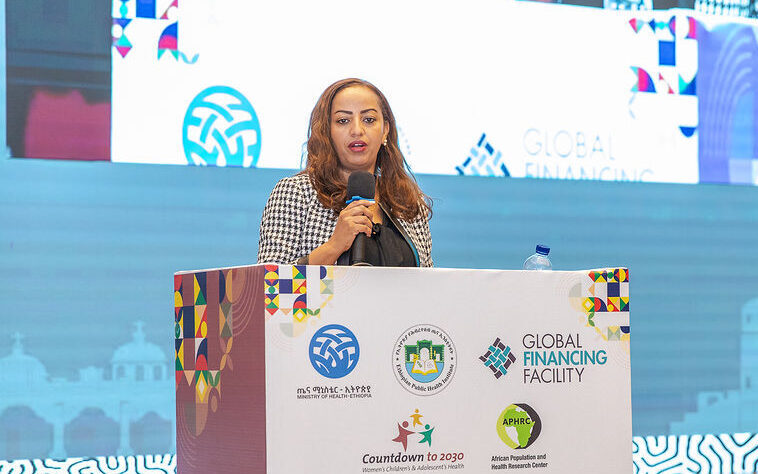
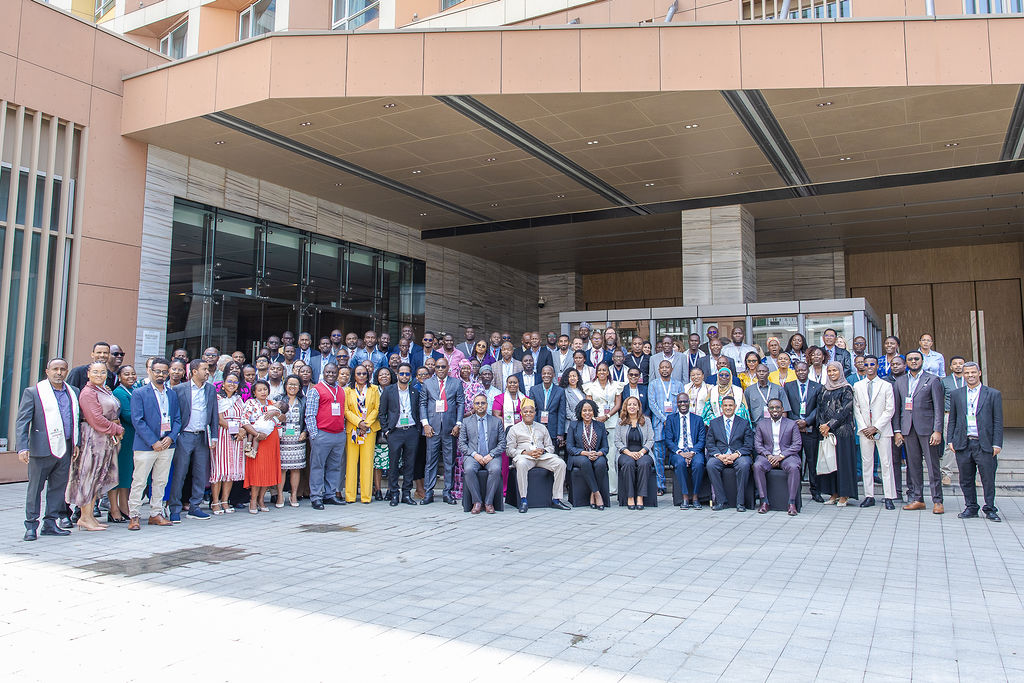
 The Countdown to 2030 Initiative held the 2026 Country Annual Meeting in Addis Ababa, Ethiopia, from June 29 to July 3, 2026. Held under the theme, “Strengthening Country-Led Evidence for Policy, Equity and Health System Impact,” the meeting brought together policymakers, researchers, Countdown country teams, and partners from 36 African countries to strengthen country-led evidence for improved health outcomes.
Opening the meeting, Dr. Mekdes Daba, Ethiopia’s Minister of Health, highlighted the Government of Ethiopia’s strategic reorganization to integrate policy and strategy better, enabling timely, evidence-informed decision-making through surveillance, research, and digital innovation. She called on participants to strengthen data quality, enhance analytical capacity, and deepen regional and global partnerships to accelerate progress toward better health outcomes.
Dr. Catherine Kyobutungi, Executive Director of the African Population and Health Research Center (APHRC), emphasized that Africa’s future depends not only on generating evidence but also on who owns it, who interprets it, and whether it strengthens national institutions. She underscored the need for continued investment in ministries of health, public health institutes, regional learning platforms, young analysts and fellows, and country-owned tools that countries can continue using beyond the meeting.
Representing the Gates Foundation, Pamela Rao said Countdown to 2030 had evolved beyond measuring service coverage to assessing effective coverage, ensuring that people not only accessed health services but also received quality care that improved health outcomes. She noted that Countdown evidence supported country reviews, strengthened accountability, and helped governments monitor progress and make informed decisions.
Jennifer Requejo, representing the Global Financing Facility (GFF), commended the longstanding partnership between the GFF and Countdown to 2030. She said the Country Annual Meeting had expanded over the years to include more countries, broader analyses, and high-quality products that informed national programs and policies. She added that the meeting’s mission of strengthening countries’ capacity to analyze, interpret, and use data for decision-making on the health of women, children, and adolescents closely aligned with the GFF’s new strategy.
Representing the West African Health Organisation (WAHO), Yves Mongbo praised Countdown to 2030 for its decade-long partnership with WAHO in strengthening evidence-based health decision-making across West Africa. He also thanked the Countdown leadership, the Government of Ethiopia, and participants from the 36 countries represented at the meeting for their continued commitment to advancing health across the continent.
Speaking on behalf of the WHO Regional Office for Africa, Dr. Benson Droti said Countdown to 2030 provided WHO with the evidence, accountability, and strategic insights needed to accelerate progress in improving the health and survival of women, children, and adolescents. He noted that gatherings such as the Country Annual Meeting demonstrate that meaningful progress is achieved when committed partners come together with a shared purpose and commitment to action.
Over the five days, participants analyzed national and subnational data, tracked progress, shared innovations, strengthened analytical capacity, and exchanged experiences to enhance the use of country-led evidence to inform policies and programs that improve the health and well-being of women, children, and adolescents across Africa.
Watch the day 1 highlights of the convening: