

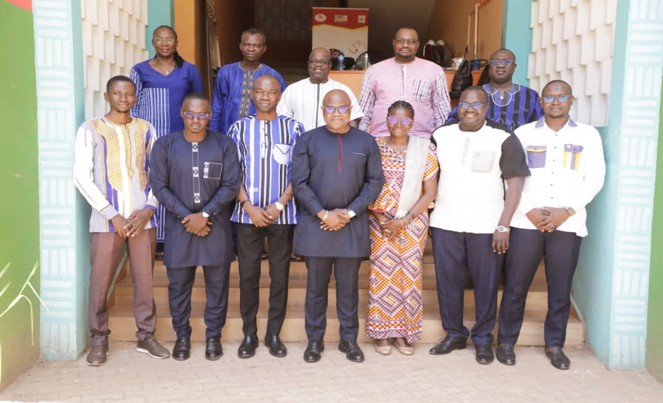
 Since winning the award for best scientific output among the 36 African countries at the 2026 annual meeting, the Burkina Faso Countdown team has been using their analysis to stimulate productive discussions with stakeholders and decision makers. First, they met with the Minister of Health and his staff on July 22; n July 31, they shared findings at the National Population Conference.
The Minister of Health, Dr. Robert Kargougou, congratulated the research team on their award and noted that the findings align with the ministry’s vision, which plans to establish a technical unit tasked with generating and leveraging this type of scientific evidence to inform the development of the country’s health system. Members of the Ministry of Health’s advisory board expressed their satisfaction with the quality of the results, which highlight findings from the field with supporting evidence. Dr. Kargougou expressed his hope that collaboration with the Institut Supérieur des Sciences de la Population (ISSP) could be strengthened through a partnership agreement, which could facilitate the research team’s access to health data.
The population conference was attended by researchers, students, technical and financial partners, representatives of public institutions and the United Nations system, and other health professionals. In the four-hour session, Countdown team members presented the results, then answered audience members’ questions about the methodology and the implication of the findings.
The presentations included coverage projections through 2030 using a Bayesian analysis approach. Despite the challenging security situation, projections suggested that Burkina Faso is on track to meet maternal health targets, thanks to a resilient health system. However, interventions in this area will need to be strengthened to maintain the observed trends.
Some other key findings:
- Data quality (completeness, internal consistency, outliers), showed a slight decline likely due to insecurity in certain regions.
- Analysis of the continuum of care revealed performance gaps between regions, with Oubri and Kadiogo leading the way, while Soum, Tapoa, and Liptako lag behind.
- Geographic inequalities in vaccination coverage were also highlighted.
- Declines in stillbirths and maternal mortality were measured, both of which were marked by persistent and significant regional disparities.
- Underreporting of maternal deaths was revealed.
- Infrastructure and staffing density were noted to be well below national targets, particularly in areas affected by the security crisis.
These discussions highlighted the importance of making research findings accessible to a broader audience to promote their adoption and use in the development and implementation of public health policies and interventions. This conference helped strengthen the national dialogue regarding the use of evidence-based information for maternal and neonatal health planning.
Learn more: