
As part of the second year of Phase 3 implementation, the Burkina Faso Countdown 2030 Country Collaboration conducted a series of in depth analyses on reproductive, maternal, neonatal, child and adolescent health, as well as on immunization, a priority thematic pillar of this phase. These analyses culminated in the production of the 2025 Countdown analytical report, complemented by a dedicated and detailed report on immunization results.

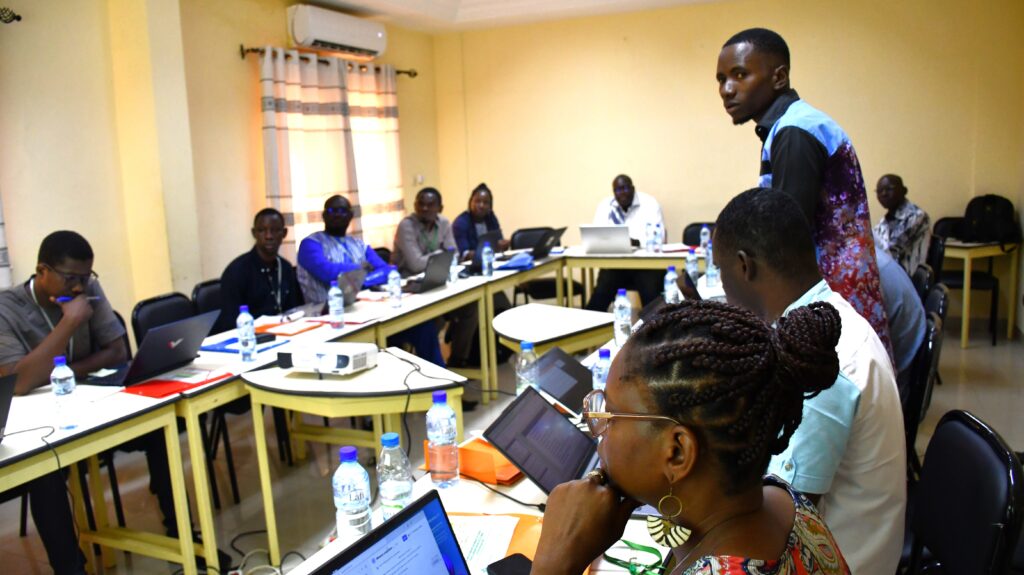
To ensure ownership, technical validation, and policy relevance of the findings, the Institut Supérieur des Sciences de la Population (ISSP) organized a national dissemination and validation workshop with members of the Technical Working Group (GTT). The workshop was held on 24 March 2025 at FEME in Ouagadougou.
Strengthening Evidence-Based Dialogue and Policy Orientation
The primary objective of the workshop was to present and discuss the key findings of the 2025 Countdown analysis, with a specific focus on immunization progress and challenges. The session aimed to create a structured space for technical dialogue between researchers, policymakers, and partners, ensuring that the evidence generated effectively informs decision making.
More specifically, the workshop sought to:
-
Present and discuss the results of the 2025 Countdown analytical report;
-
Share and validate the findings of the immunization analyses;
-
Validate two priority themes, proposed by the research team, for the development of policy briefs;
-
Identify and agree on priority topics for future qualitative research.
Key Outcomes of the Workshop
The discussions led to several concrete outcomes. The Technical Working Group formally validated the results of the 2025 Countdown analytical report, confirming their relevance and methodological robustness. The immunization analysis results were also reviewed and endorsed, reinforcing their value for tracking progress and guiding programmatic action.
In addition, two priority themes were selected for the development of policy briefs, ensuring a clear pathway from evidence to policy dialogue. Participants also identified and validated a set of themes for qualitative research, aimed at deepening the understanding of contextual and systemic factors influencing RMNCAH and immunization outcomes in Burkina Faso.
A Participatory and Rigorous Methodological Approach
The workshop was structured around technical presentations followed by in-depth discussions. The research team presented preliminary findings indicator by indicator, allowing GTT members to provide feedback, raise methodological questions, and suggest contextual interpretations. This participatory approach ensured that the final results reflect both analytical rigor and country-level realities.
Multi-Stakeholder Engagement
The workshop brought together a diverse group of stakeholders, including members of the Technical Working Group, five researchers from ISSP, eight representatives from the Ministry of Health and Public Hygiene, three representatives from national research institutions, and one development partner. This broad participation strengthened cross-sectoral ownership of the findings and reinforced collaboration between research institutions and decision makers.
Looking Ahead
By validating the analytical findings and identifying clear priorities for policy briefs and qualitative research, this workshop marked an important step in translating Countdown evidence into actionable insights for Burkina Faso. It reaffirmed the role of Countdown 2030 as a strategic platform for strengthening data use, accountability, and evidence-informed policymaking in reproductive, maternal, neonatal, child and adolescent health and immunization.