
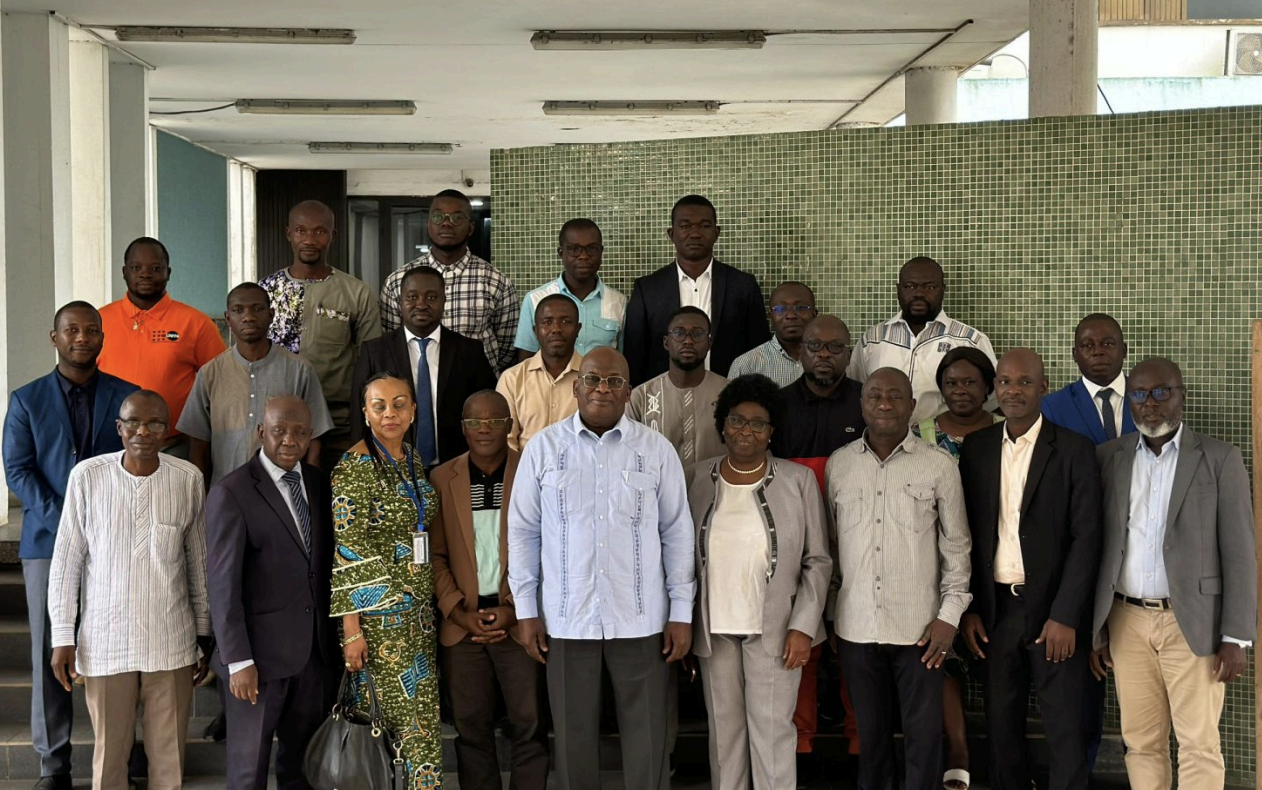
On August 28, 2025, Côte d’Ivoire’s National Institute of Public Health (INSP) convened a national workshop in Abidjan to share recent findings on reproductive, maternal, newborn, child, and adolescent health and nutrition (RMNCAH+N), along with vaccination trends for the period 2019–2024. At the workshop, Côte d’Ivoire’s country collaboration, led by INSP, presented key outcomes from the 2025 annual meeting.The event was organized in collaboration with Countdown to 2030, the African Population and Health Research Center (APHRC), and the Global Financing Facility (GFF).
Below is a news clip reporting on the event:
Key Findings
The analysis highlighted notable progress in several areas:
-
Maternal health services: Increase in the use of prenatal care and childbirth services in health facilities in recent years, with gaps narrowing between urban and rural populations and between women with and without formal education.
-
Childhood vaccination: Coverage continues to improve, particularly for the Penta3 vaccine. In nearly 90% of health districts, the dropout rate between the first and third doses has now fallen below 10%. Measles vaccination coverage has also stabilized, reflecting stronger continuity in immunization services.
Remaining Challenges
Despite encouraging trends, participants acknowledged persistent challenges:
-
Data quality: Routine health data remain below international standards, with data completeness at 80% in 2024, compared to 82% in 2019.
-
Zero-dose children: According to the 2021 Demographic and Health Survey, nearly one in three children in Côte d’Ivoire have not received any vaccines, underscoring the urgency of reaching the most vulnerable populations.
Commitments and Next Steps
 Representing the Director General of INSP, Dr. Jacques Katché, Director of Medical and Social Services, commended the technical teams and partners for their efforts and recognized the substantial progress achieved in vaccination coverage, maternal health service use and reduction of inequalities in access to care between regions and social categories. Health authorities also reaffirmed national commitments to:
-
Strengthening the continuity of vaccination services,
-
Improving the quality of routine health data, and
-
Expanding equitable access to essential health services, particularly for disadvantaged communities.
These efforts are central to advancing Côte d’Ivoire’s progress toward the Sustainable Development Goals (SDGs) by 2030.