
This post was written by Rogers Nsubuga, lead author of a paper titled, “Maternal and child healthcare coverage and trends: refugee vs. non-refugee districts in Uganda” which was published in the journal Conflict and Health. Nsubuga completed this analysis through the Countdown fellowship program.
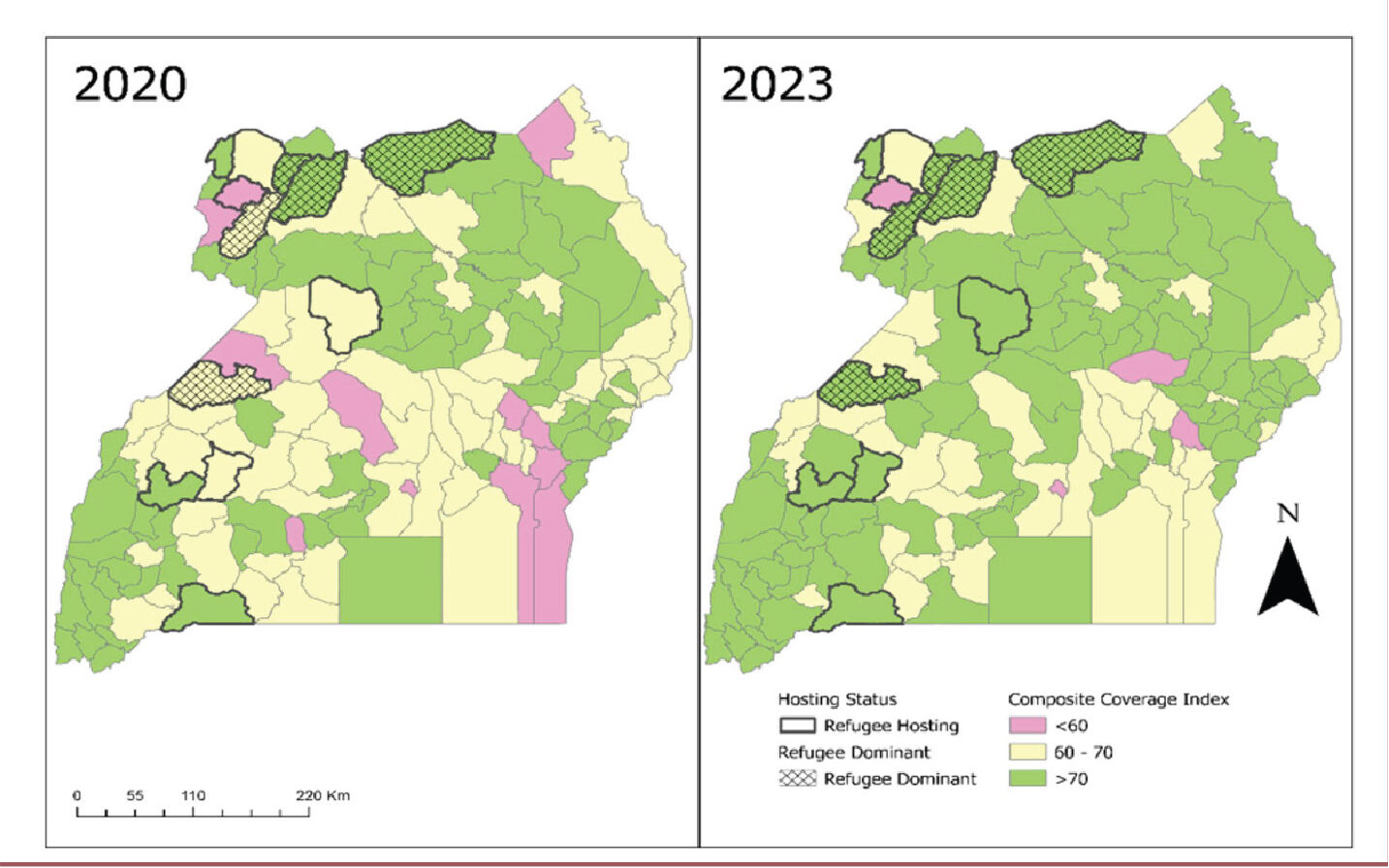
Uganda hosts Africa’s largest refugee population, placing substantial strain on district health systems. However the impact of targeted investments on maternal and child health (MCH) service coverage remains unclear. Using routine facility data from the Uganda DHIS2 and district Primary Healthcare (PHC) expenditure data from 2020 through 2023, we conducted retrospective analysis, compared MCH coverage and trends between refugee‑hosting and non‑refugee-hosting districts. We then assessed the influence of government financing and health system performance across the following key indicators:
- Antenatal care (ANC) during the first trimester,
- Four ANC visits (ANC4,
- Institutional delivery,
- Maternal postnatal care,
- Measles and DPT3 coverage, and a
- Composite coverage index (CCI).
Refugee-hosting districts consistently demonstrated modestly higher coverage and trends, alongside significantly higher government expenditure. Mixed‑effects models showed that PHC financing and health system performance were positively associated with most MCH outcomes. Further adjusted analyses indicated higher ANC4 coverage in refugee-hosting districts and significant gains in CCI were positively associated with increased expenditure and stronger system performance. Overall, refugee hosting status particularly benefits ANC4, and sustained improvements in district‑level MCH coverage depend largely on government investment and health system strengthening. Thus, the findings highlight increased primary healthcare financing as a key lever toward universal coverage.