
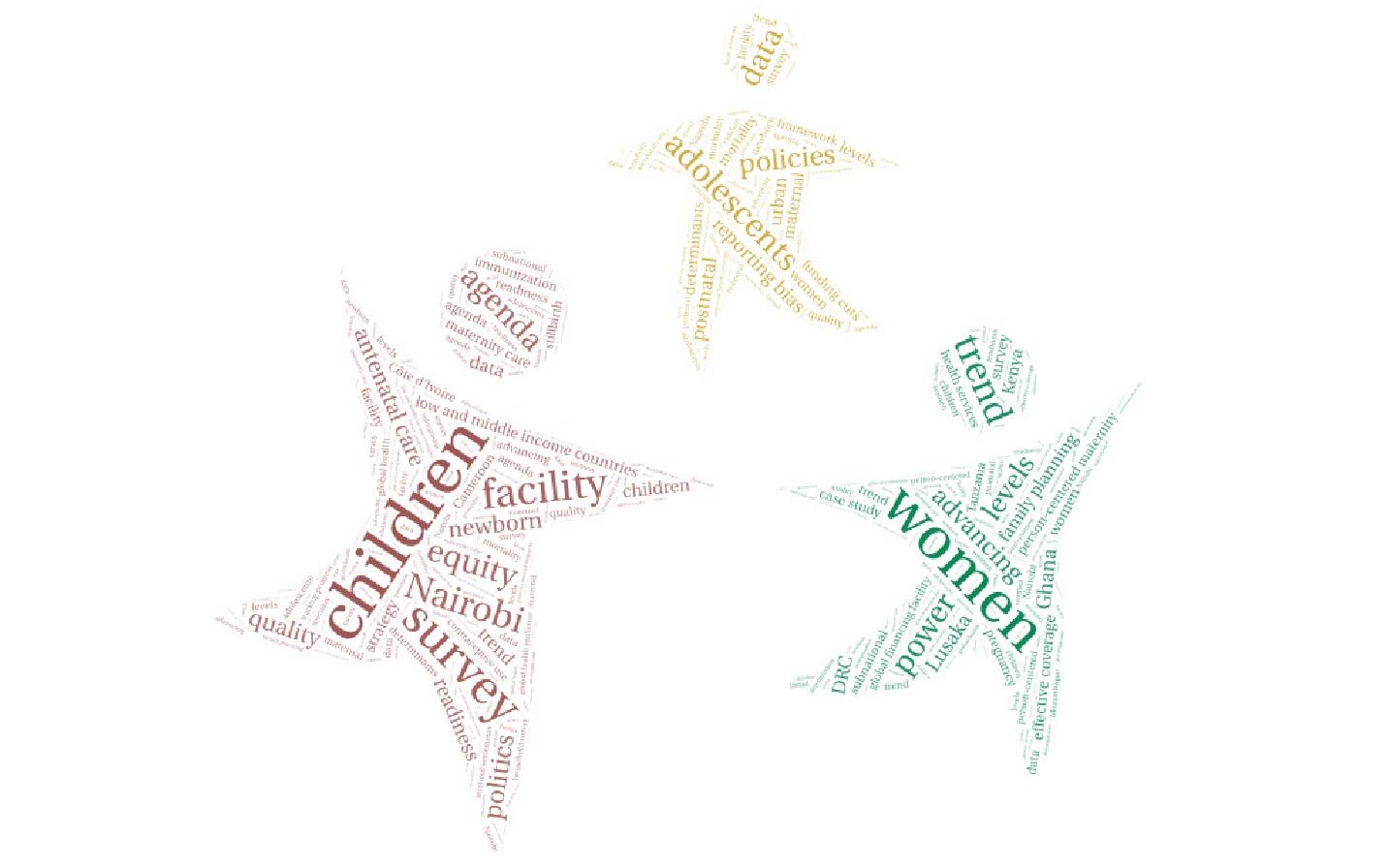
Despite upheaval in the global health community, 2025 marked another year of strengthened engagement at the global, regional, and national levels for Countdown.
A new Lancet report provided a pulse check on progress toward the Sustainable Development Goals. We strengthened regional partnerships in Africa, such as through the Ouagadougou Partnership. We built on insights from the maternal newborn health exemplars studies through an integrated mortality transition framework. Countdown fellows continued sharing their research, and a new cohort began. We published 24 peer-reviewed journal articles to strengthen the knowledge base for improving reproductive, maternal, newborn, child and adolescent health and nutrition.
Other achievements for 2025:
Maximizing use of health facility data. We held the largest annual meeting to date, with the Shiny app simplified and streamlined analysis.
Made the case for improved health equity · Retriever was launched and is being leveraged through Countdown and Global Financing Facility partnerships.
Advanced knowledge around effective coverage · We published new analysis around antenatal care, maternal care, family planning, newborn postnatal care, sick child care.
Generated health systems & policies insights · In partnership we several organizations, we analyzed the GFF’s first 7 years.
Engaged with decision makers at country level · 47 reports and more than 18 policy briefs published · Numerous in-person and virtual events around data use and capacity-strengthening took place.
Integrated geospatial data with routine health systems data
Below is a list of journal articles and commentaries published in 2025:
Commentaries:
- Rethinking global health resilience amid donor funding cuts
- When Health Data Go Dark: The Importance of the DHS Program and Imagining Its Future
Urban health:
- Assessing Courtesy Reporting Bias in Facility- Based Surveys on Person-Centred Maternity Care: Evidence from Urban Informal Settlements in Nairobi and Lusaka
- Levels and determinants of person-centred maternity care among women living in urban informal settlements: evidence from client exit surveys in Nairobi, Lusaka and Ouagadougou
- Unintended Pregnancy and Contraceptive Use among Residents of Slum and Non-Slum Areas in Kinshasa, DRC: A Comparative Analysis Using PMA Survey Data (2014–2020)
Effective coverage:
- Building an effective coverage cascade for antenatal care: linking of household survey and health facility assessment data in eight low- and middle-income countries
- Effective coverage of newborn postnatal care: assessing the service contact-content gap in 32 low- and middle-income countries using household survey data
- Health service readiness and quality for sick child care: an effective coverage analysis in eight low- and middle-income countries
- Inequalities in effective coverage of the maternal healthcare continuum in Cameroon: a cascade analysis from service contact to input-adjusted coverage
- Inequities in effective coverage of family planning services in low- and middle-income countries: linking household and facility surveys
Family planning: Demand for Family Planning Satisfied by Modern Methods in Ghana: Trends and Inequalities (2013–2022)
Immunization: Subnational Trends and Inequalities of Under-Immunisation and Zero-Dose among Children Aged 12–23 Months in Uganda
Maternal mortality:
- Trends in maternal mortality and stillbirths by county in health facility data, Kenya, 2011-2022
- Trends in reproductive and maternal healthcare indicators, Côte d’Ivoire, 2018 to 2020
- Universal health coverage for women of reproductive ages: a survey-based comprehensive assessment of service utilisation and health expenditure in Tanzania
- Spatio-temporal patterns of health service delivery and access to maternal, child, and outpatient healthcare in Volta region, Ghana: a repeated cross-sectional ecological study using health facility data
Supplement: