


Across Africa, the challenge is no longer the absence of data but the persistent gap between generating evidence and using it effectively in policy and practice. Despite decades of research on reproductive, maternal, newborn, child, and adolescent health and nutrition (RMNCAH+N), African-led evidence remains under-utilized in decision-making. Limited domestic research capacity, weak mentorship, fragmented data systems, and low policy demand continue to slow progress in reducing preventable maternal and newborn deaths and stillbirths.
Closing the Knowledge Gaps Countdown to 2030 country collaborations address these challenges by placing countries at the center of evidence generation, analysis, and use. As of 2025, Countdown has expanded support to more than 30 countries, building a continent-wide ecosystem of national researchers, ministries of health, and public health institutions aligned around data-driven accountability for the health of women, children, and adolescents.
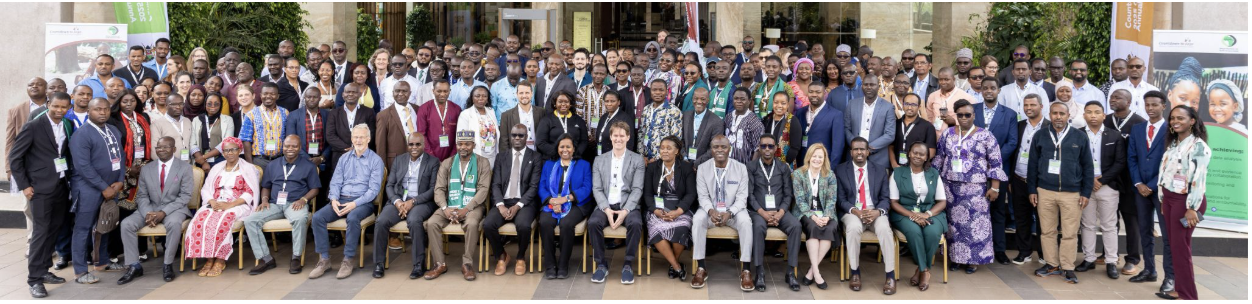
Participants of the Countdown to 2030 2025 Country Annual Meeting pose for a group photo during the meeting.
Country-Led Analysis for Policy-Relevant Evidence At the core of Countdown’s approach is long-term investment in national analytical capacity. The initiative works directly with ministries of health, national statistical offices, public health institutes, and universities to integrate and analyze multiple data sources, including household surveys, routine health information systems, and facility assessments. This country-driven model ensures the evidence produced is methodologically sound, locally relevant, timely, and actionable. Since 2005, Countdown has been involved in monitoring progress toward global goals through the country profiles and other efforts. In addition, particularly since 2020, Countdown analyses have been increasingly used to inform national RMNCAH+N strategies and investment decisions.
Beyond Analysis, Strengthening Knowledge Translation Countdown’s support extends beyond data analysis. Country teams are systematically strengthened in knowledge translation, ensuring evidence reaches decision-makers in formats they can understand and use. This includes training in scientific writing, policy brief development, data visualization, and stakeholder engagement.
These investments are yielding tangible results. Country researchers are publishing in peer-reviewed journals, increasing the visibility, credibility, and policy influence of African-led research. Evidence is also increasingly shaping national conversations on maternal and newborn health priorities.
Data Analysis Centers and Open-Source Innovation To further institutionalize localized analysis, Countdown has established six data & analysis centers around the themes of health facility data, equity, effective coverage, geospatial, health policies and systems, and health financing. These centers provide advanced analytical tools, mentorship to country teams.
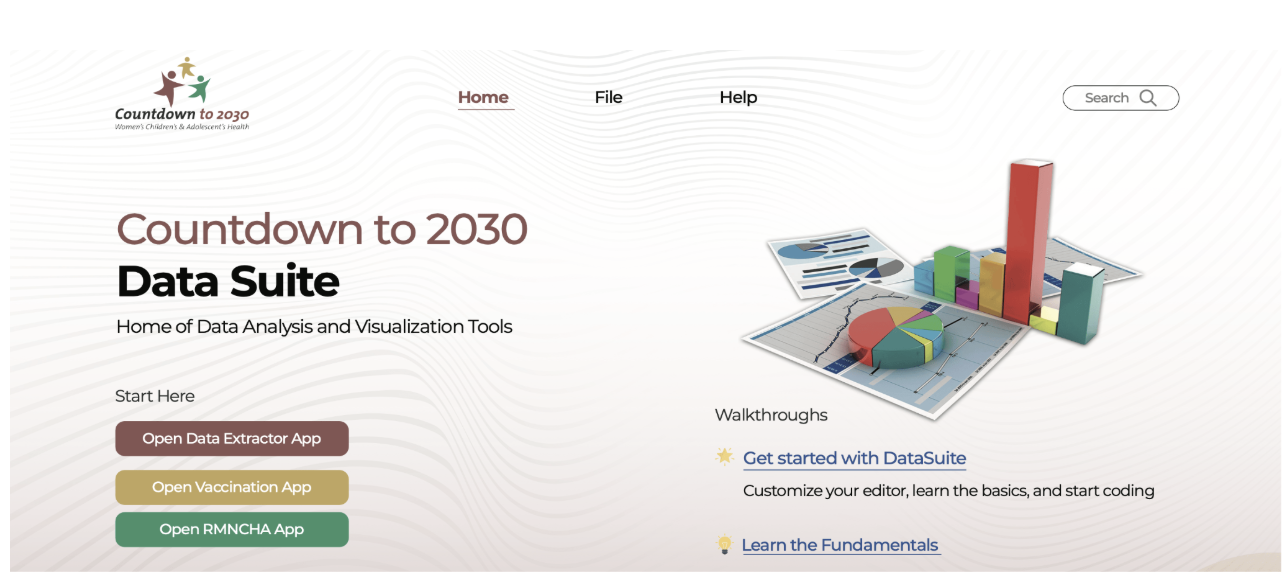
The landing page of the Countdown to 2030 data suite.
To further streamline data analysis and use, in 2025 Countdown developed the CD2030 Analytical Tool, using the Shiny app and with R statistical computing software.
Building the Next Generation of African Evidence Leaders Countdown’s fellowship program is a flagship investment in sustainability. Through a competitive selection process, 10 early-career African researchers from collaborating countries receive one year of intensive training in data analysis, scientific publishing, and policy engagement. Fellows are embedded in national teams, contributing to country reports, peer-reviewed publications, and advocacy efforts.

Cover page of the Countdown to 2030 Fellowship Program Cohort 1 Impact Booklet, showcasing the achievements and contributions of the inaugural fellowship cohort.
By the end of the fellowship, participants emerge not only as skilled analysts but as policy-engaged leaders actively influencing maternal and newborn health decision-making within their countries.
By prioritizing country leadership, building local analytical capacity, and investing in the next generation of African researchers, Countdown is closing the gap between knowledge and impact. This approach strengthens national ownership of RMNCAH+N data, ensuring that policies and investments are based on locally generated, equity-focused evidence.
By the Countdown to 2030 Communications Team: Assane Diouf and Diana Munjuri, Senior Communications Officers, African Population and Health Research Center, and Emma Williams, Senior Research Associate, Johns Hopkins University.